sustainability

news - 23-09-2026

Human Company, Legambiente and Ipsos Doxa present their research on sustainable tourism

Immagine illustrativa

Research findings on the sector and Human Company’s path towards an increasingly structured measurement of its ESG impact through SROI

Human Company, an Italian group and key player in the hospitality sector, continues its sustainability journey and presents the third edition of the  "Tourism & Sustainability" Observatory, held this year in collaboration with Ipsos Doxa and, for the first time, with Legambiente (with which the Tuscan company has recently entered into a partnership focused on low-impact tourism and the promotion of local areas). 

Research shows an approach to tourism that is increasingly focused on sustainability, but also more aware of the consequences of choices: about 3 out of 10 travellers say they experience a form of eco-anxiety linked to their travel decisions, confirming how the environmental aspect is playing an increasingly central role in the decision-making process of tourists. 

In line with this trend, the Group is strengthening its ESG commitment with a new and important step: the introduction of the Social Return on Investment (SROI) study, aimed at measuring and assessing the social impact generated by its activities on local areas and communities.

The results of the observatory: awareness of sustainable tourism is growing and the way we travel is changing

Sustainability has now become an integral part of the travel culture of Italians, who increasingly see it as an individual responsibility. 72% of travellers believe that their choices can have a tangible impact on the sustainability of destinations and 79% say they are willing to change their travel habits to reduce their environmental impact.

This increased awareness translates above all into simple and immediately actionable behaviours: respecting local flora and fauna (37%), correctly managing waste (37%), respecting natural resources (35%), reducing energy consumption by avoiding waste (33%), using public transport or more sustainable means of transport (28%) and choosing less crowded destinations or destinations geared towards "slow tourism" (26%). On the other hand, there is still a more limited level of willingness to engage in activities that require more active involvement, such as participating in initiatives to raise awareness of sustainable tourism (8%) or taking part in cleaning and voluntary work during their stay (8%).

When it comes to choosing where to stay, travellers prioritise primarily the most tangible aspects of sustainability. Among the key features are the use of renewable energies (44%), water conservation (39%), proper waste sorting (38%), protection of the natural environment (35%) and the use of local, zero-kilometre food and wine products (34%); the importance of supporting the local economy and the use of local suppliers is also growing (26%, +3% compared to 2025).

It is no coincidence that in this edition of the study agritourism (90%), alpine and mountain refuges (86%) and campsites/holiday villages (83%) are confirmed as the establishments perceived as most sustainable by Italians; a fact that highlights the strong link, in the minds of travellers, between sustainability, nature and forms of hospitality capable of showcasing and telling the story of the local area in a direct and authentic way. These are followed by B&Bs (79%), hostels (72%) and apartments for rent (70%), while the association with sustainability is rather less for spa sites (55%), hotels (35%) and resorts (30%), which show a slight improvement while still remaining far from this perception. Finally, cruise ships remain the accommodation type perceived as the least sustainable (16%). While eco-anxiety represents the emotional side of the phenomenon, the observatory's data also shows how the growing attention to sustainability has a tangible influence on travellers' choices, including those related to the accommodation in which to stay.

Outdoor tourism is increasingly a form of "community-positive travel" 

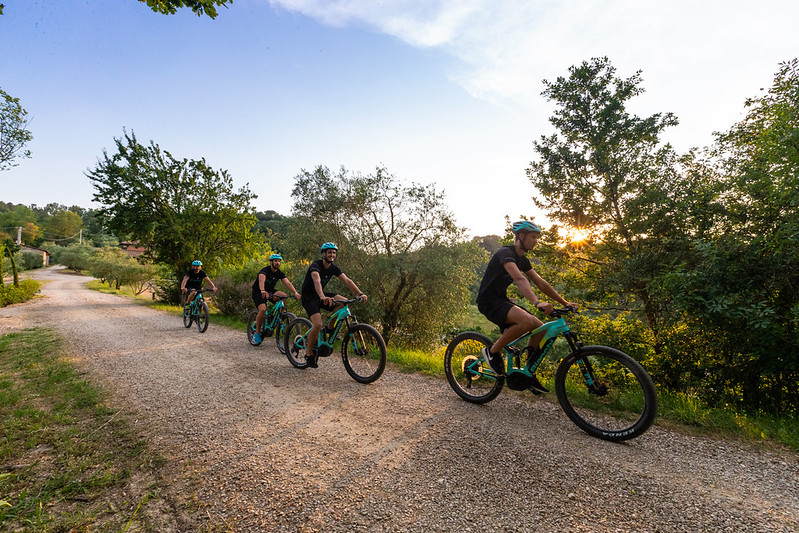
Outdoor tourism continues to win over Italians, proving to be an increasingly widespread experience capable of generating value not only for travellers, but also for the local areas in which it takes place. According to the research, connection with nature remains one of the strongest elements of the tourist experience: 71% of Italians say they take part in outdoor tourism and for 3 out of 10 travellers it is a frequent habit. The figure is even higher among families with young children (37%), Gen Z and residents of the Northeast (both at 36%).

What emerges above all is the ability of this form of tourism to create a more authentic relationship with local communities. For 79% of Italians, in fact, outdoor tourism promotes forms of "community-positive travel", i.e. experiences capable of connecting travellers with local communities, people and regions. This belief is even more widespread among Millennials (82%) and those who travel regularly in Europe (84%).  

From sustainable tourism to regenerative tourism: how will holidays change?

The research also looks to the future, showing how climate change and new environmental concerns are destined to transform the way we travel. Italians show an increasing willingness to change their habits, preferring lesser-known destinations (75%), low season travel (74%), public transport and modes of travel that help reduce environmental impact (62%), as well as accepting longer journey times (57%).

The change also extends to accommodation providers and the way hospitality is experienced: about 6 in 10 travellers would be willing to choose accommodation fitted with air conditioning systems designed to improve energy efficiency even if this meant a slight reduction in perceived comfort.

At the same time, a shared vision of responsibility is emerging: for Italians, the transition to more sustainable tourism requires a joint commitment from institutions (28%), hospitality providers, the European Union and local government (25%), as well as of course travellers themselves (22%).

This responsibility also translates into looking for more effective solutions to manage tourist flows: respondents particularly favour incentives for the low season (35%), improvement of public transport (28%) and the development of alternative itineraries (27%), while restrictive measures, such as the application of limitations on short-term rentals (15%) and the introduction of higher tourist taxes (12%), receive more limited support.

In this context, a new concept of sustainability is also taking shape: for 29% of Italians, “regenerative” tourism will represent one of the main drivers of the sector’s development between now and 2030: not only holidays designed to reduce environmental impact, but experiences capable of generating a positive impact, actively contributing to the protection and improvement of nature, territories, communities and the places visited. This is followed by local tourism (19%), the introduction of stricter rules and shared standards (18%) and the growing difficulty in distinguishing tangible initiatives from those that are simply greenwashing (18%).

Human Company confirms and strengthens its commitment to sustainability

Alongside the research, Human Company is taking a further step forward in its ESG journey in line with its 2026-2030 Sustainability Plan by introducing the Social Return on Investment (SROI) analysis, a tool that measures the social, economic and cultural value generated by the Group's activities.

Included in the 2025 Impact Report, the analysis offers a broader view of Human Company's contribution to people, communities and local areas, allowing an understanding of how the value generated translates into tangible positive effects that go beyond the strictly corporate sphere. 

The result is an SROI of 3.33, equivalent to about 219 million euros of social value generated: for every euro invested in the activities analysed, Human Company generates over three euros of social, economic and cultural value. The services and opportunities provided by the facilities, from water parks to sports areas, to the local discovery experiences offered by infopoints, benefit both guests and the local communities that can use them, also contributing to generating this value.

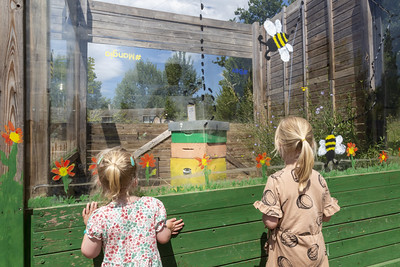
Underpinning this result is a model that aims to create ongoing interaction between sites, guests and local areas, involving local organisations and generating tangible positive outcomes, through projects designed to strengthen local socio-economic development. This commitment takes the form of projects carried out in collaboration with schools, trade associations, traders and Pro Loco organisations to promote destinations close to the sites; activities that showcase local artisans and traditions by involving local associations and operators; and initiatives designed to bring local events and traditions into the sites; in addition to these are the areas within the villages dedicated to biodiversity which are also open to communities and schools.

To continue measuring and understanding this ability to generate value over time, the SROI analysis is to become a regular undertaking, with the aim of monitoring the impact produced by the Group on the areas in which it operates and following its development over time.

Partnership

The partnership with Legambiente: a shared commitment to sustainable tourism

The discussion with Legambiente resulted in some valuable moments, such as the round table that brought together institutions and industry operators to discuss a more balanced and environmentally conscious approach to tourism in all its aspects. The collaboration has also been extended through Human Company's support of the association's activities with participation in and sponsorship of a programme of initiatives aimed at protecting the environment and promoting more sustainable tourism. The Group took part in Festambiente, the national festival dedicated to ecology and sustainability, and supports the Puliamo il Mondo initiative, the association's environmental volunteering campaign. The collaboration also involved the Festa dell’albero, the campaign that Legambiente has been promoting for over 30 years to help protect and preserve ecosystems and green spaces. Ahead of the 2026 edition of the Festa dell’albero, scheduled for 21 to 24 November, at the Fabulous Village on 2 September Human Company hosted a preview of the urban forestry initiatives planned throughout Italy through activities dedicated to environmental awareness, with particular focus on children. 

Mattia Rosati, Chief Corporate Services Officer at Human Company.

"At Human Company we believe that sustainability must be increasingly measurable, tangible and shared. This is why, alongside listening to travellers opinions in our survey, we have chosen to equip ourselves with tools that allow us to objectively assess the value we generate for people, local areas and communities. Objective tools are the only way to turn commitments into tangible results and guide future choices. With this in mind, the introduction of SROI represents a key step on a path that will continue to guide the Group's development in the coming years and confirms the Group's willingness to contribute to the development of tourism that is increasingly sustainable, regenerative and able to create value for people, local areas and communities" 

Vanessa Pallucchi, Vice President of Legambiente

"This research on sustainable tourism, carried out in collaboration with Legambiente, comes after a summer that has made the consequences that climate change is having on our lives all too real, in terms of health, quality and daily habits. Respondents’ awareness of the need to move towards more responsible and sustainable tourism has now become a necessity that must change both demand and supply in tourism. The heat waves of recent months and the last few summer seasons are not going to be exceptional events, which is why the tourism sector too needs integrated public-private policies that take into account mitigation and adaptation strategies. The data collected in this research is valuable to our understanding how aware we are of the need to move towards this type of change"

Davide Cilia, Senior Researcher at Ipsos-Doxa

"The Observatory shows how sustainability has now become an integral part of the way Italians think about travel: it’s not an abstract principle any more, but a real part of the experience. It is now associated with nature conservation, local products, outdoor experiences and an authentic relationship with local communities. There remains, however, a gap between professed attitudes and actual behaviours: many travellers are willing to change their habits, choosing lesser-known destinations or travelling in the low season, but this willingness decreases when higher costs or significant sacrifices are required. The challenge for the sector is therefore to make sustainable choices simple, accessible and recognisable, through a shared commitment between institutions, operators and individuals. From this perspective, the tourism of the future is moving towards an increasingly adaptive and regenerative style: it should not limit itself to reducing its impact, but actively contribute to the well-being of local areas and communities"