Human Company's outdoor tourism observatory with Istituto Piepoli: over 6 out of 10 Italians are already looking to summer 2027
Between alternative destinations, outdoor holidays and AI, travellers' habits continue to evolve, driven by the pursuit of quality and personalisation
The 2027 summer season is still far away, but Italians are already thinking about their next escapes. The way travellers organise their holidays is also evolving thanks to the new opportunities offered by digital tools and artificial intelligence.
According to the new results of the Outdoor Tourism Observatory carried out by Istituto Piepoli on behalf of Human Company, an Italian group and a leading player in the outdoor hospitality sector, 62% of Italians are already thinking of taking at least one overnight holiday in summer 2027.
The survey was conducted in October 2026 on a sample of 1,500 adults, representative of the Italian population.
From searching for a destination to booking, through to recounting the experience, the Observatory highlights just how digital tools now accompany travellers at all stages of their journey.
More specifically, traditional search engines have cemented their place as the reference platforms for most of the process, starting with the choice of destination (56%). In this phase, the websites of the various sites and destinations also play an important role (36%), in addition to online reviews (31%). In the booking and organisation phase, on the other hand, the websites of sites and destinations take precedence (41%), followed by traditional search engines (36%) and booking portals and apps (35%). During the holiday, traditional search engines (31%) are joined by maps and geolocation services (21%); finally, for recounting the travel experience, social networks have assumed a central role (34%), representing the most popular digital channel.
Alongside these tools, artificial intelligence is emerging as a new ally in holiday planning, claiming its own place within travellers' digital habits. Its use is particularly significant in the phase devoted to inspiration and choice of destination (17%); it is less prevalent during booking and organisation (8%). However, the potential of these technologies is most apparent in the search for personalised and affordable solutions: for planning their next summer holidays, 40% of Italians would use AI to compare travel solutions and prices, while 31% would use it to search for ideas, destinations and less crowded alternatives; 30% consider it useful to identify activities and places to visit; and 28% would use it to build custom itineraries.
Looking to summer 2027: new trends and enduring travel habits
In addition to the evolution of digital tools, the Observatory highlights the changes in Italians’ expectations with regard to the coming summer season.
For 2027, the most significant transformation concerns the way travellers envisage and organise their holidays. Among the main trends, new priorities have emerged, including the pursuit of lesser-known and less crowded destinations (18%), experiences in contact with nature (18%), and, above all, a willingness to book earlier (19%), which highlights a greater propensity for trip planning. These trends reflect an increasing desire among guests to experience holidays in line with their needs, taking into account factors such as the climate and crowd levels at the destination. Specifically, 15% of respondents plan to choose periods outside of the usual range because of these very aspects.
Alongside a desire for change, however, travellers are looking to maintain certain elements from 2026, including travelling with the same travel company (chosen by 28%) and enjoying contact with open spaces (24%), seeking sharing and connection with nature.
The outlook for 2027 underlines the value that Italians place on their holidays. Summer 2026 yielded positive results and did not disappoint travellers: two out of three Italians (66%) took at least one holiday between May and September, with 9.4 nights representing the longest stay.
The high level of satisfaction (91% among those who travelled) reflects the importance and impact of the tourist experience. In terms of spending for 2027, 36% plan to spend more. A positive trend also emerged with regard to stay length: 22% plan to increase the number of days spent on holiday, while just 9% are planning a shorter trip.
The open air is winning over more Italians
Open-air tourism also played an important role in the last summer season: 45% of Italian travellers said they took at least one outdoor holiday, choosing options such as campsites, holiday villages, farm stays, mountain huts or multi-stop trips.
With regard to the 2027 summer season, 70% of respondents consider an outdoor holiday attractive. This interest is mainly driven by value for money, deemed important by 89% of respondents, and also by the opportunity to feel free and independent. Discovering the surrounding areas remains another exciting possibility for those considering outdoor holidays (88%), followed by the ability to be in direct contact with nature (86%).
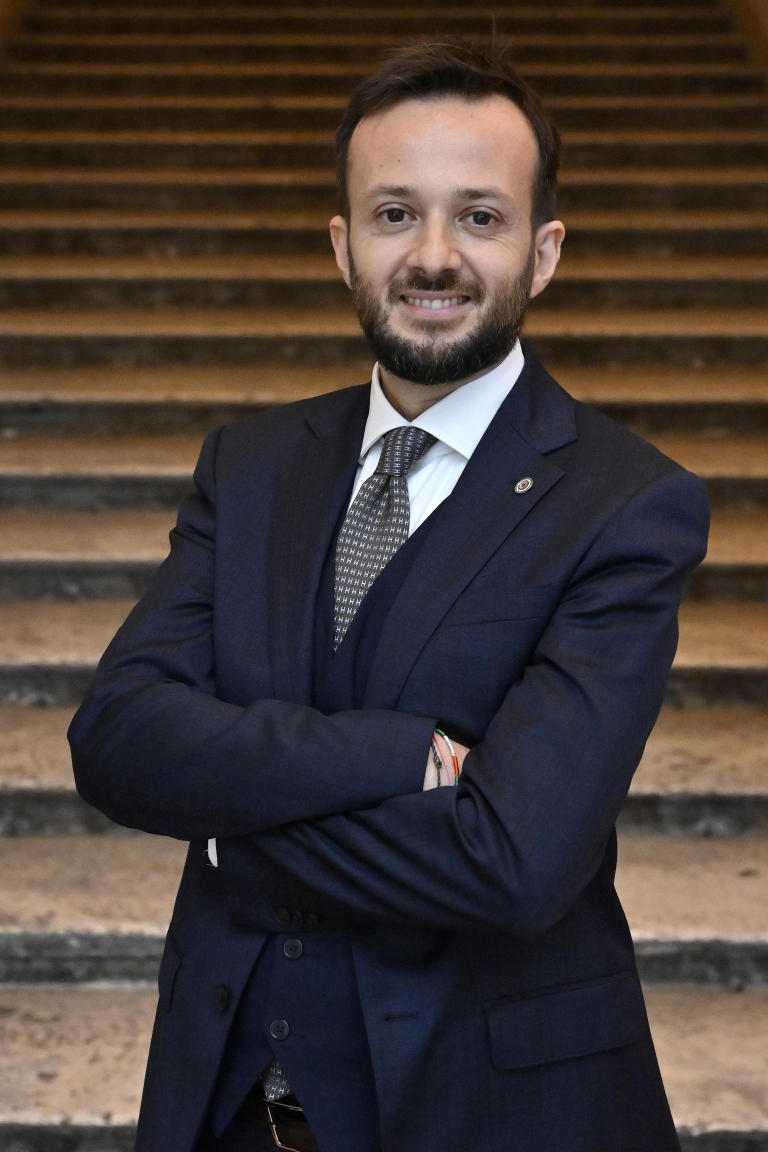
Valentina Fioravanti, Chief Marketing & Communication Officer of Human Company
“The results of the Observatory confirm that tourist demand remains strong with regard to summer 2027, and that Italians are increasingly interested in alternative destinations, moving off the beaten track. More significant and relevant than ever, this trend is perfectly aligned with the open-air model, which is capable of meeting travellers’ desires for nature, quality time and authenticity. At the same time, the spread of advanced AI-based technologies is reshaping the travel experience, from the early inspiration and planning stages to booking, right through to the stay itself; for Human Company, this means continuing to invest in a hospitality model characterised by an excellent welcome, intuitive and invisible technology, and care for the regions where our sites are located and the communities that live there”
Livio Gigliuto, Chairman of Istituto Piepoli
"Our research paints the picture of an augmented traveller, who is able to change the way they live and organise their holidays thanks to digital technology. Through social media, they become an explorer, discovering new destinations; thanks to search engines, they become a calculator, comparing prices and savings opportunities; with digital platforms, they becomes a personaliser, building tailored experiences. Three dimensions of the same transformation: the transition from a tourism model based on supply to a tourism model increasingly built around the individual. However, a paradox has also emerged: the more the role of technology grows, the more travellers are seeking authentic experiences, in contact with nature and far removed from traditional routes"
Among the insights included in the Observatory is an in-depth study from Google: “The new frontier of AI: from personalised research to Agentic AI.”
In the text, Fabio Galetto, Travel Sector Lead at Google Italy, highlighted how the way in which people search for what they need has evolved, and how this is reflected in the Google Search experience and its use in holiday planning, thanks in part to AI.
From a simple search for information, there has been a shift towards contextual intelligence, moving away from single keywords to a more natural and articulated dialogue.
This trend represents an interesting development for outdoor tourism, where the organisation of a stay often requires combining different elements, from choosing a site to planning activities in the area, taking into account the budget and weather conditions. In this scenario, agentic AI represents the next step: the new frontier of artificial intelligence that aims to turn research into action, accompanying the traveller throughout their entire journey, from initial inspiration to booking the stay and ancillary experiences.
For outdoor hospitality operators, this evolution opens up new opportunities to intercept international demand and offer increasingly fluid and personalised booking experiences, in which the final decision always lies with the traveller. Finally, the value of hospitality and advice must remain the irreplaceable heritage of industry professionals.